Alice Glasnerová
Blogs:
2017
Thank you, Senator McCarthy: 18 Aug, 2017
Noel Field, soviet spy: 10 Sept, 2017
The
hunting dog finds a scent: 30 Sept, 2017
My past ghost: 24 Oct, 2017
Two worlds: meeting Alice for the first time: 26 Nov, 2017
2018
The London connection: 14 Feb, 2018
Stepping into the shadows: 13 March, 2018
Return
to the land of milk and honey: 22 April, 2018
Return to Czechoslovakia: 7 June, 2018
Dual
heritage: 18 June, 2018
Zilina, then and now: 1 July, 2018
A fateful triangle: Erwin, Noel Field and Alice: 29 Aug, 2018
Friends forever: 23
Oct, 2018
Lost luggage: 6 Nov, 2018
Questions of right and wrong: 20 Dec, 2018
2019
Letters from Alice: 26 Jan, 2019
A tale of two photographs: 1 March, 2019
In her father’s steps she trod: April 17, 2019
Prison visit: May 21, 2019
Cartoons and correctness: May 27, 2019
Visiting the dead: June 10, 2019
Alice in the archives: June 21, 2019
Dislocated worlds: May 12, 2019
Au revoir and not good-
Bienvenida Espana: 8 September 2019
Bullfighting in Albacete: 9 September 2019
Benicasim -
Surrounded by danger: 21 September 2019
Arrivals and departures: 29 September 2019
A place of execution (A cold afternoon): November 29, 2019
Seventy years on: 4 December 2019
Windows into the past: 10 December 2019
2021
Munich revisited: February 28, 2021
Will there be a Holocaust museum in Prague?: October 10, 2021
Statue wars: October 14, 2021
Transitional objects: October 21, 2021
My blogs
The Revenants: February 2024
We are in a semi-

We are waiting for a short film to begin which will tell us about two Jewish escapees
from Auschwitz, who have recently come to fame as a result of Jonathan Freedland’s
best-
This year, the weekend includes a visit to the basement in which the two men were hidden and in which they wrote out their testimony. The young woman from the tourist office, who shows us the film, speaks little English, and as the film finishes and we all break out with questions and memories, she is quite out of her depth.

That small room contains the daughter whose mother brought food to the two men while they were in hiding there, and then the questions and connections multiply. We have come from all over the world – South Africa, Australia, Israel, Britain and, of course, Slovakia itself, drawn by a common heritage and keen to share names and histories. The young woman from the tourist office is used to school parties, not the actual returnees whose families shared the experiences which, to her, are just history. She stands, slightly bewildered, as we all talk together with an intensity born of the opportunity for a shared past. For us, those events are woven in grief and loss in our families and in who we are, but in our everyday lives our history requires too much explanation. Here, it needs none.
We re-
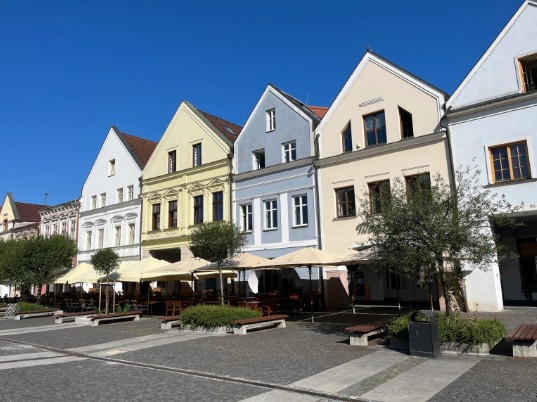
We too are revenants, ghosts from the past, who for one weekend walk again across the squares, round the little streets and stone arcades, searching for houses in streets that have changed their names, or car parks where once stood a family business, or a strange pawn shop which had been a doctor’s surgery. The town is small, and there are about 100 of us, so we keep bumping into each other, greeting each other in a tiny reflection of what our past might have been, in a town where everyone was known. Comparing notes with others, I realise their families lived yards from my father’s surgery, and were probably his patients. We are all connected, our ancestors were shopkeepers, artisans, doctors, bankers, lawyers, hoteliers, we were woven into the fabric of the town and now we are adrift, scattered across the world. Only the graves and memorials remain and a few descendants who never left.
On Sunday we have the opportunity for a service in the old synagogue. It is hardly used now, so few are left, but on this day the rabbi for Slovakia, himself a refugee from Ukraine, will take a service of remembrance, one in which we can each name our lost loved ones. He explains it in Slovak and English as many of us are unfamiliar with the service, but there we stand, saying the names of fathers, mothers, wives, brothers, sisters and then, at the end, others we loved and lost. For the fraction of time in which their name is spoken they are alive again in Žilina. They may not have been religious and many of us are not, but the naming is powerful and moving and uplifting.
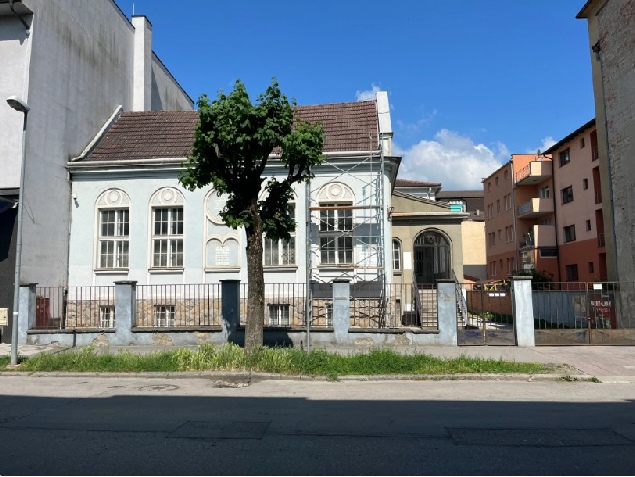
The final official event is in the memorial hall of the Jewish cemetery, where the
walls are covered with the names of the lost. We walk first in the graveyard, which
is being well cared for, grass mown, trees planted and the writing on the headstones
re-
When the ceremony begins, we have introductions and then a talk by the mayor who manages to strike the exact right note of respect and inclusion, acknowledging the central contribution of the Jewish community to the town. I can’t stop crying, silently, involuntarily. The tears just course down my cheeks unchecked. The next speaker is a survivor. He has come from Canada, but he speaks in Slovak and we listen to this old man, whose voice chokes as he describes his father being shot on the death march. For him, the passage of years has done nothing to diminish the loss. The young boy is ever present within him, however far he has travelled and however many years have passed. His loss speaks to our own, those we knew or never knew, except from photographs; an absence and a question. The room is heavy with loss, somehow intensified because it is shared.

The event is being filmed and the camera pans round to take in the room. We are the ghosts, returned from a lost world, and on this Sunday morning, it seems as if we are welcome. Tomorrow we will be gone, back to the many new lives we have made, belonging and not belonging, because a part of who we are remains in this small Slovak town.